
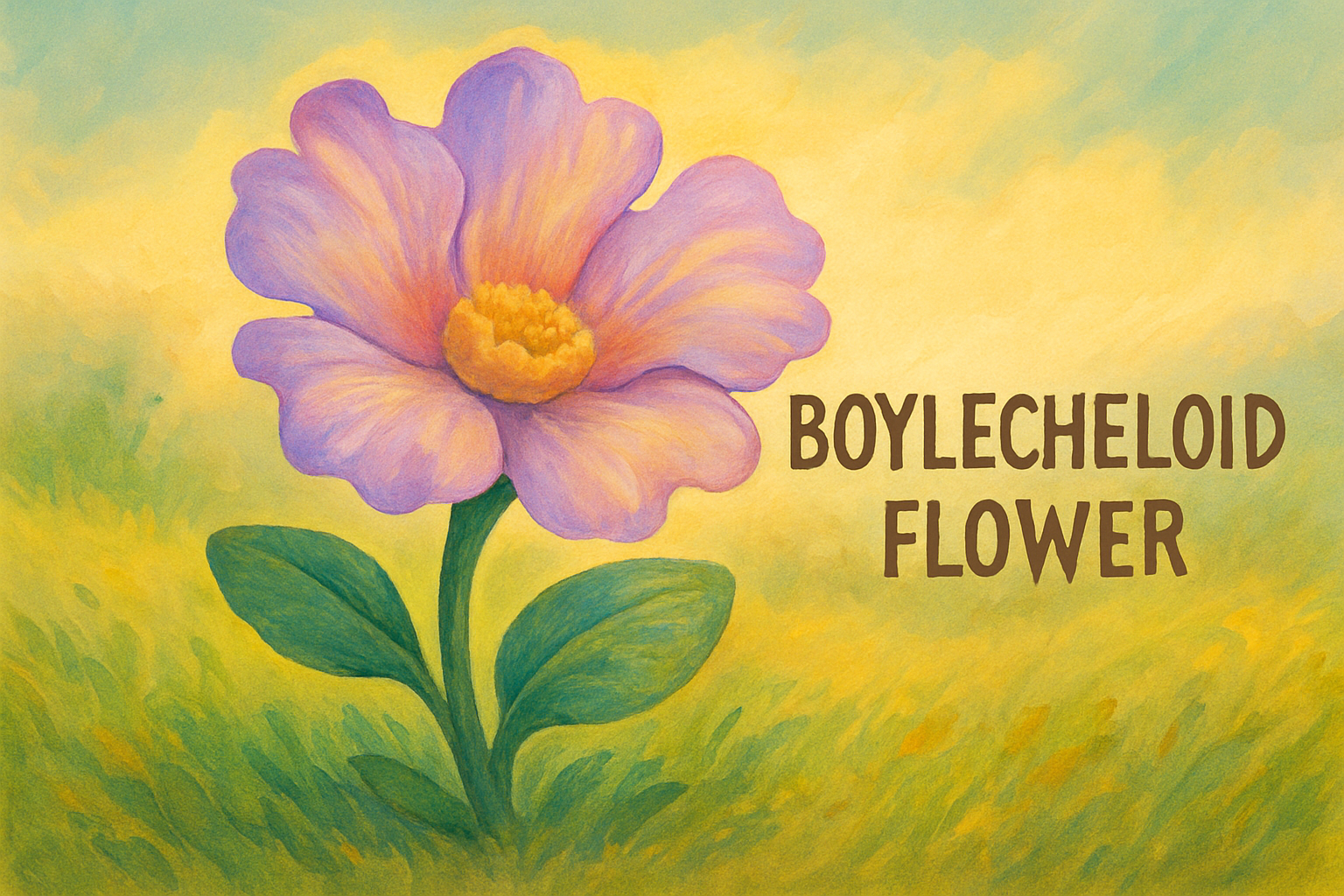
The Boylecheloid flower has become one of the most frequently searched “mystery blooms” on the internet. Garden enthusiasts, social media users, and plant lovers often encounter stunning images of spiral petals, shifting colors, and poetic descriptions—yet almost no verified botanical information. This contradiction is exactly why the Boylecheloid flower has captured so much attention. Is it a rare botanical treasure? A misidentified plant? A digital creation? Or simply a marketing term that became viral?
This article explores the Boylecheloid phenomenon in a practical, evidence-based, and user-friendly way. You will learn what the term likely refers to, why it appears across search engines, and which real-world flowers match the descriptions people associate with it. You’ll also find a detailed growing-guide section based on the most common look-alike species, plus expert tips that help you identify and care for similar plants. By the end, you’ll clearly understand the myth, meaning, and reality of the Boylecheloid flower.
The Boylecheloid Flower: Why It Became an Internet Mystery
Search engines show thousands of results mentioning the Boylecheloid flower, yet professional plant databases, botanical books, and scientific catalogs show no record of any species by that name. This instantly signals that “Boylecheloid” is not an officially recognized plant—it’s a term created and repeated online.
So why is it everywhere?
Because the internet loves beautiful names, mysterious origins, and aesthetically stunning images. Blogs and social posts often use captivating but unofficial plant names to get attention. The Boylecheloid flower fits this pattern perfectly: romantic-sounding, unique, and unusual enough that people immediately want to know more. As the name spread, more websites copied descriptions from one another, strengthening its online presence despite the lack of scientific backing.
In short: the Boylecheloid flower is a viral concept, not a formal botanical species. But the images associated with the term are usually real flowers—just mislabeled.
Which Real Flowers Are Mistaken for the “Boylecheloid”?
Although the name is unofficial, the photos and descriptions resemble several well-known flowers. Here are the most likely matches:
1. Cosmos flowers
Many images labeled as “Boylecheloid” match beautiful variations of cosmos. These blooms have delicate, radiating petals and come in soft pink, white, purple, and deep red shades. Their dainty appearance and airy growth habit make them strong candidates for the mislabeled images.
Key Traits:
- Soft, layered petals
- Tall, slender stems
- Blooming colors from white to deep burgundy
- Long-lasting summer flowers
2. Chocolate Cosmos (deep maroon variety)
This rare cosmos variant is famous for its velvety, dark petals and subtle chocolate scent. Online images often exaggerate its appearance using editing—leading people to believe it’s something entirely new.
Key Traits:
- Dark, rich color
- Fragrance similar to vanilla or chocolate
- Compact and elegant bloom shape
3. Orchids (especially hybrids)
Some “Boylecheloid” images resemble ornate orchid hybrids. Orchids often display structural colors, ruffled edges, and layered petals, which match many of the dramatic looks associated with the mystery flower.
Key Traits:
- Sculptured petals
- Color shifts in light
- Complex floral shapes
- Long-lasting blooms
4. Edited or AI-enhanced flower photos
A small portion of Boylecheloid images appear digitally enhanced. Extra spirals, unnatural color gradients, or perfect symmetry point to image manipulation rather than a real species.
How the Name Spread Across the Internet
The Boylecheloid story is a perfect example of how digital content evolves:
Step 1: A unique term appears
Possibly created by a blogger, plant enthusiast, or even a content generator.
Step 2: Photos are attached
Either real flower images or edited ones are labeled “Boylecheloid.”
Step 3: Multiple small websites copy the same content
This repetition boosts search results, creating the illusion of legitimacy.
Step 4: Curiosity creates demand
People search the name, fueling more content creation.
Step 5: The cycle reinforces the myth
The more people look for it, the more websites write about it—even without scientific basis.
The result: a digital flower that feels real because it’s everywhere, even though no botanist has ever classified it.
How to Identify “Boylecheloid” Photos Correctly
Because the name is unofficial, identifying the actual flower in an image requires observation. Use this simple visual checklist:
1. Petal shape
- Wide and flat? Likely cosmos.
- Curled or ruffled? Possibly an orchid.
- Highly symmetrical spirals? Possibly edited.
2. Center structure
- Yellow button center → cosmos
- No visible center, just folded petals → orchid
3. Leaf pattern (if visible)
- Thin, feathery leaves → cosmos
- Thick, glossy leaves → orchid
4. Color behavior
- Changes with light angle → possible orchid or edited image
- Matte, soft shades → likely cosmos
5. Background clues
- Garden soil and full sun → cosmos
- Indoor pot or bark medium → orchid
These quick checks make identification easy even for beginners.
Growing Guide for Flowers Commonly Mistaken as Boylecheloid
Since the Boylecheloid flower isn’t an actual species, here are the correct care tips for its closest real-world matches.
If the plant resembles Cosmos (most common look-alike):
Light:
Full sunlight for 6–8 hours daily.
Soil:
Loose, well-draining soil. Cosmos tolerate poorer soil better than most flowers.
Water:
Water when soil is dry; avoid over-watering.
Fertilizer:
Minimal fertilizer—too much nitrogen reduces blooms.
Care Tips:
- Deadhead spent blooms for continuous flowering
- Support taller varieties with thin stakes
If it resembles an Orchid:
Light:
Bright, indirect sunlight. Avoid harsh midday rays.
Soil:
Special orchid potting mix (bark, perlite, sphagnum).
Water:
Water once the medium is almost dry. Never let roots sit in water.
Humidity:
40–60% humidity is ideal.
Care Tips:
- Wipe leaves occasionally
- Allow proper airflow
- Fertilize lightly during the growing season
If the image looks digitally enhanced:
Digital flowers don’t follow care rules—so focus on identifying the closest real species. If you share an image, I can give direct identification and matching plant-care advice.
The Cultural Appeal of the Boylecheloid Name
Even though it isn’t a scientific term, “Boylecheloid” has strong aesthetic appeal. It sounds poetic, exotic, and rare, which is exactly why people are drawn to it. Words influence how we perceive beauty, and a unique name can transform a familiar flower into something that feels magical.
This trend reflects a broader digital habit: assigning mystical or fantasy names to ordinary objects to make them seem more special. The Boylecheloid flower is essentially the “fairycore” of garden blooms—part fantasy, part confusion, and part admiration for nature’s beauty.
This makes the flower less of a real species and more of an artistic concept, reminding us how imagery and language shape our experience of plants.
Responsible Gardening: Why Labels Matter
Proper plant identification is important for:
- Buying the right seeds or plants
- Understanding correct growing conditions
- Avoiding scams for “rare exotic seeds”
- Supporting ethical plant trade
- Not spreading misinformation
If a seller uses the term “Boylecheloid,” always ask for the botanical name. Reputable nurseries will provide exact species identification.
Read More: Adrian CryptoProNetwork: Full Review, Features, Safety
Conclusion
The Boylecheloid flower may not exist as a scientifically recognized species, but the fascination surrounding it is very real. What began as a poetic or invented term has evolved into an online curiosity fueled by beautiful images, repeated descriptions, and the natural human attraction to mystery. When examined carefully, most photos labeled as “Boylecheloid” belong to real flowers like cosmos or orchids, or occasionally to digitally enhanced creations.
Understanding this helps gardeners and plant enthusiasts make informed decisions, avoid misinformation, and appreciate real botanical beauty without confusing marketing terms for science. The lesson is simple: names matter, accuracy matters, and nature is already filled with extraordinary flowers that don’t need fictional labels to inspire admiration. Whether you grow cosmos in your garden or orchids indoors, the beauty people associate with the “Boylecheloid” can be enjoyed through real, identifiable plants.
FAQs
1. How can I grow a Boylecheloid flower?
Because the Boylecheloid is not a real species, grow the plant pictured—usually cosmos or orchids—using their proper care instructions.
2. Is the Boylecheloid flower rare?
The name is rare, but the flowers associated with it are common garden varieties or popular orchid hybrids.
3. What does “Boylecheloid flower” mean?
It is an internet-created term used to describe photos of beautiful flowers but has no botanical definition.
4. Can I buy Boylecheloid seeds online?
You may find seeds marketed with that name, but always request the true botanical name to ensure authenticity.
5. Why are so many different flowers labeled as Boylecheloid?
Because the term spread online without scientific grounding, many websites reused it for various attractive blooms.